Originally posted on Dec 26, 2025 on my Substack, unfolding creases.
SPOILER ALERT
history was my least favorite subject in school. i was told to memorize specific dates and disjointed major historical events, which ended up just feeling more like a menial task than an intellectual treat. it appears that what history schooling lacked for me, though, was the storyline that ties everything together into a narrative on humanity. that’s what makes it interesting. and this is what sophie’s world does.
while it’s a herculean task to fit all of the history of philosophy1 into one book, the necessary conciseness works in the book’s favor. it requires the trimming of anything unnecessary to the core historical throughline. as such, the book is able to highlight the causal relationships between each major philosophy.
but sophie’s world is as much a fictional storybook as it is a textbook. for most of the book, the narrative component was really only perceptible through the conversational framing of the philosophical lessons sophie receives from her teacher, alberto, and the short passages of plot progression. while the narrative was not yet consequential, i did find that the conversational framing made the content much more digestible. indeed, it was obviously much easier to follow along than if i had been reading the original philosophical texts.
midway through the book, we discover sophie and alberto are characters in a philosophical book written for another girl, hilde, by her father, but the significance is not yet apparent. only as we near the end of the book, and the end of the philosophical lessons, do we see the narrative arc come to fruition. i’ve seen this tactic criticized by others, saying that it made the story portion of the book feel tacked on, but i found it quite clever. the last lesson alberto gives to sophie, and by extension to us, was on existentialism and absurdism, which ended up being taught not only through exposition but also through immersion. after this lesson, sophie hosts her garden party, at which some truly absurd events take place: chicken bones being thrown on the roof, children crashing cars into trees, to name a few. the events seem to highlight the absurdism of sophie and alberto’s constructed world, as well as the extent to which the other characters in it have taken for granted what is true. as sophie and alberto escape out of that universe, they enter a dream-like limbo where they finally intersect realities with their creators, hilde and her father.
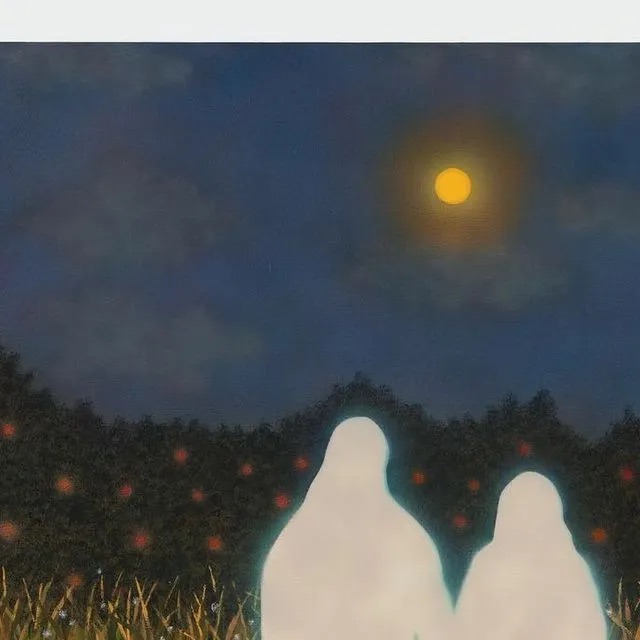
as they sit and watch hilde and her father converse, i can’t help but notice my own existence alongside theirs. it’s as if all of sophie, alberto, hilde, and her father actually existed with the same validity as each other and myself. and as i read the conversations between hilde and her father, i recalled how i had read hilde reading the conversations between sophie and alberto, and wondered to myself if i too am hilde, a character made up by some analogous jostein gaarder creator. whether perhaps i am also written into heather’s world, one of all the individual books found in the great bookstore of the universe.
sophie’s world blurred the lines between a philosophical textbook and an existentialist experience, giving me a visceral understanding of philosophy that catalyzes an increasing interest in humanity. the lessons i took away from this book are not only the intellectual comprehension of the history of philosophy but also the questions and interest that guide philosophical and existential thought itself.
Footnotes
-
i’m going to just say philosophy from now on for brevity but i mean western philosophy ↩